8 Best DNP Programs in New Jersey – 2026
Written By: Pattie Trumble, MPP, MPH
 Why is a DNP degree such an excellent educational investment for New Jersey-based nurses? Because a DNP is versatile: Whether your interests lie in hands-on patient care, executive nurse management, or nursing education, a DNP prepares you to practice nursing at the most advanced level. A DNP will enhance your earning potential: Graduates of DNP programs in New Jersey make $156,230 a year on average. Healthcare employers in the Garden State understand the value of hiring DNP-educated RNs, and employment opportunities for DNPs are projected to go up by 51 percent within the next decade. Is a DNP program the right professional move for you? Find out with this guide to the 8 best DNP programs in New Jersey.
WHAT ARE THE BEST DNP PROGRAMS IN NEW JERSEY (ONLINE & CAMPUS) FOR 2026?
Based on our Ranking Methodology, listed below are the 8 Best Doctor of Nursing Practice programs in New Jersey (Online & Campus) for 2026.
1. Rutgers University - Newark
Programs Offered: BSN-to-DNP and MSN-to-DNP
BSN-to-DNP Specialties Offered: Adult-Gerontology Acute Care Nurse Practitioner, Adult-Gerontology Primary Care Nurse Practitioner, Family Nurse Practitioner, Family Nurse Practitioner in Emergency Care, Pediatric Primary Care Nurse Practitioner, Dual Pediatric Primary/Acute Care Nurse Practitioner, Psychiatric-Mental Health Nurse Practitioner, Nursing Leadership, Nurse-Midwifery, and Dual Women’s Health/Nurse-Midwifery, and Nurse Anesthesia
MSN-to-DNP Specialties Offered: Practice and Nursing Leadership
Rutgers offers one non-clinical track, eight solo Advanced Practice Registered Nurse (APRN) tracks, and two dual APRN tracks: a 75-credit (725 direct patient hours) BSN-to-DNP/Adult Gerontology Acute Care Nurse Practitioner (AGACNP) track, a 69-credit (750 direct patient hours) BSN-to-DNP/Adult Gerontology Primary Care Nurse Practitioner (AGPCNP) track, a 75-credit (870 direct patient hours) BSN-to-DNP/FNP track, an 81-credit (945 direct patient hours) FNP in Emergency Care track, a 74-credit (765 direct patient hours) Pediatric Primary Care Nurse Practitioner (PPCNP) track, a dual 85-credit BSN-to-DNP/Pediatric Acute Care Nurse Practitioner (PACNP) + PPCNP track, a 78-credit (752 direct patient hours) BSN-to-DNP/Psychiatric Mental Health Nurse Practitioner (PMHNP) track, a 60-credit (500 direct patient hours) BSN-to-DNP/Nursing Leadership track, an 77-credit (945 direct patient hours) BSN-to-DNP/Nurse-Midwifery track, a dual 80-credit (1,080 direct patient hours) BSN-to-DNP/Women's Health/Nurse-Midwifery track, and an 85-credit (2,800 direct patient hours) BSN-to-DNP/Nurse Anesthesia track.
All BSN-to-DNP tracks require 1,000 practicum hours. You will make up the additional hours you need to meet this requirement with practicum hours, implementing and evaluating your DNP project. You must complete your clinical rotations in New Jersey. Rutgers University maintains strong partnerships with numerous hospitals and clinics throughout New Jersey, including University Hospital, Cooperman Barnabas Medical Center, Cooper University Health Care, and Jersey City Medical Center.
All 11 tracks share a common DNP coursework foundation, which you'll undertake in your very first year, with classes like "Information Technology for Evidence-Based Practice," "Clinical Inquiry for Evidence-Based Practice," and "Management & Analysis of Health Data for the DNP." You'll complete your DNP project during your third year. Nurse Anesthesia students will be able to take the first year of their studies online, but after they begin anesthesia specialty courses, they will attend in-person classes at the Rutgers Biomedical and Health Sciences campus in Newark. Students pursuing other specialties will be able to access most of their classes online, but they will have to visit the campus in Newark periodically for skills intensives and simulation experiences.
The Nurse Anesthesia track begins in the summer semester and takes nine semesters (36 months) to complete. Rutgers University's other BSN-to-DNP tracks begin in the fall and take 11 semesters (44 months) to complete if you enroll full-time and 14 semesters (56 months) if you enroll part-time. All tracks apart from Nurse Anesthesia have fall start dates, and the BSN-to-DNP/AGACNP and BSN-to-DNP/Nursing Leadership tracks also have spring start dates.
All applicants must have an RN license in New Jersey or a compact state and a BSN degree from an accredited nursing program with a GPA of 3.2 or higher. Nurse Anesthesia applicants must have at least a year and a half of experience in a critical care practice setting and Advanced Cardiac Life Support (ACLS) and Critical Care Registered Nurse (CCRN) certification.
MSN-to-DNP Program Details: Are you a nurse with a master's degree who's looking for the best way to fast-track your professional career? Rutgers University offers a 36-credit Master's of Science in Nursing (MSN)-to-DNP/Practice track and a 42-credit MSN-to-DNP/Nursing Leadership track that will impart the knowledge and skills you need to become a clinical administrator or a healthcare executive.
The DNP core, including the DNP project, is identical to the BSN-to-DNP program. The Practice track has a fall entry point and can be completed in eight semesters (32 months); you can start the Nursing Leadership track in either the spring or fall semesters and graduate in eight semesters full-time (32 months) or 11 semesters (44 months). To qualify for admission, applicants must be licensed as an RN in New Jersey and have completed an MSN with a GPA of 3.2 or above.
Must-Know Highlights For Potential Students
• U.S. News & World Report ranks Rutgers University's DNP program the fifth-best in the United States.• Rutgers University is a designated National League for Nursing Center of Educational Excellence.
• Rutgers University's BSN-to-DNP/Nurse Anesthesia track is the only doctoral program in New Jersey preparing nurse anesthesiologists. Graduates have a 91 percent first-attempt pass rate on the National Certification Examination (NCR).
2. Seton Hall University - South Orange
Programs Offered: MSN-to-DNP
MSN-to-DNP Specialties Offered: Direct Care (Advanced Practice) and Indirect Care (Administration & Leadership)
This DNP program in New Jersey is ideal for working RNs because it uses an asynchronous format, and it's designed for part-time enrollment. You'll be able to complete your practicum hours in the state where you hold an RN license. You can begin in either the spring or fall semester and graduate in five semesters (20 months). All applicants must have a BSN or MSN from an accredited nursing program with a minimum GPA of 3.0.
Must-Know Highlights For Potential Students
• Seton Hall University is a Catholic school. Though the university admits students from all religious backgrounds, its nursing curriculum reflects Catholic doctrines.• Seton Hall University also offers a 71- to 77-credit dual BSN-to-DNP/ Direct Care (Advanced Practice) + Indirect Care (Administration & Leadership). This program awards students both an MSN and a DNP degree.
3. Stockton University - Galloway
Programs Offered: BSN-to-DNP and MSN-to-DNP
BSN-to-DNP Specialties Offered: Adult Gerontology Primary Care Nurse Practitioner and Family Nurse Practitioner
The two tracks use the same foundational DNP curriculum, featuring courses like "Biostatistics & Epidemiology in Population Health," "Biostatistics & Epidemiology in Population Health," and "Advanced Research and Evidence for Practice." Both tracks culminate with a three-semester DNP project, which will give you the opportunity to synthesize research and translate it into a real-world setting.
You'll complete clinical practicums in New Jersey at medical facilities like Ocean Medical Center, Community Medical Center, and Deborah Heart and Lung Center, so all applicants must hold an RN license in the Garden State. Applicants must also have a BSN with a grade point average of 3.2 or higher.
MSN-to-DNP Program Details: Stockton University's 27-credit MSN-to-DNP track is a quick, convenient way for RNS with a nursing master's degree to advance professionally. You'll take the same core DNP classes, including the DNP project, that students in the BSN-to-DNP program take, graduating in just five semesters (20 months). The program includes 500 hours of practicum experience, which you must complete in New Jersey. All applicants must have a nursing master's with a grade point average of 3.2 or higher.
Must-Know Highlights For Potential Students
• Stockton University's FNP and AGPCNP grads have a first-time pass rate of 100 percent on their nurse practitioner national certification boards.• This DNP program in New Jersey teaches nursing care strategies based on the Roy Adaptation Model, which emphasizes patient-centric care in a dynamic environment by integrating theory, evidence-based practice, and holistic care.
4. Monmouth University - West Long Branch
Programs Offered: MSN-to-DNP
You'll also complete 500 practicum hours in the practice setting where you implement your DNP research project. (You'll be able to transfer MSN clinical hours to make up your 1,000-hour DNP requirement.) You can complete your practicum hours at a healthcare facility in your own hometown. Monmouth University accepts new cohorts into its MSN-to-DNP program in the fall semester. Applicants must have a nursing master's degree with a grade point average of 3.2 or higher.
Must-Know Highlights For Potential Students
• Monmouth University also accepts applicants with master's degrees in related fields such as public health, health administration, and business administration into its MSN-to-DNP program.• Monmouth University MSN-to-DNP program requires applicants to be residents of New Jersey, New York, or Pennsylvania.
• Interested in nursing education? Monmouth University offers a 12-credit Nurse Educator Elective track, which you can complete concurrently with your MSN-to-DNP degree.
5. Fairleigh Dickinson University - Teaneck
Programs Offered: MSN-to-DNP
You can access Farleigh Dickinson University's MSN-to-DNP program online. Apart from one weekly class meeting that takes place in real time, all your other coursework will use an asynchronous format. After taking core DNP courses such as "Biostatistics & Epidemiology," "Leadership & Organizational Analysis," and "Translational Research," you'll begin working on a three-semester evidence-based DNP project. Between the clinical hours associated with your MSN degree and your MSN-to-DNP practicum hours, you must complete a minimum of 1,000 clinical hours. You can complete your practicum hours at a hospital or clinic in the state where you hold an RN license.
Submit your application through NursingCAS. This program is only open to MSN-educated students whose grade point average is 2.8 or higher.
Must-Know Highlights For Potential Students
• Are you a BSN-educated student with a master's degree in a non-nursing field? You can still enroll in Farleigh Dickinson University's MSN-to-DNP program by taking an individualized bridge program.• 100 percent of Farleigh Dickinson University's MSN-to-DNP students find employment in a leadership role.
6. Ramapo College Of New Jersey - Mahwah
Programs Offered: MSN-to-DNP
Ramapo's MSN-to-DNP program includes 540 hours of clinical residency, which you must complete at a healthcare facility in New Jersey. While much of the program is offered online, you will travel to the college's campus in Mahwah a few times each semester for in-person sessions. Ramapo College's MSN-to-DNP program accepts new students each fall. Prospective applicants must have an MSN from an accredited nursing program with a grade point average of 3.5 or higher.
Must-Know Highlights For Potential Students
• 100 percent of Ramapo College's MSN-to-DNP grads find employment in their chosen field within one year of completing the program.• Ramapo College maintains partnerships with prestigious hospitals that have been designated as Centers of Excellence in Nursing, such as Valley Hospital, Hackensack University Medical Center, and St. Joseph's Regional Medical Center.
7. William Paterson University - Wayne
Programs Offered: BSN-to-DNP and MSN-to-DNP
BSN-to-DNP Specialties Offered: Adult-Gerontology Nurse Practitioner Primary Care and Family Nurse Practitioner
You'll pursue most of your DNP coursework starting in the fourth year of the program. Your core DNP courses will include "Evidence Based and Translational Research Methods," "Applied BioStatistics," and "Scientific Foundations for Nursing," as well as a multi-semester DNP project. Between supervised patient care experiences and practicums dedicated to implementing and evaluating your DNP project, you must complete a minimum of 1,000 clinical hours at medical facilities throughout New Jersey. William Paterson University has clinical affiliations with some of the top hospitals and medical centers in the Garden State, including Hackensack Meridian Health, Valley Health Systems, St. Joseph's Health, and Atlantic Health Systems.
WPU accepts new students into its BSN-to-DNP program in the spring and fall semesters. You'll need a current New Jersey RN license and a BSN with a grade point average of 3.0 to apply.
MSN-to-DNP Program Details: If you already have a nursing master's degree, you can enroll in William Paterson University's core 38-credit DNP curriculum as a stand-alone MSN-to-DNP track. Full-time students can graduate in seven semesters (30 months), but the university also offers a part-time enrollment option. Apart from in-person practicums, this program is entirely online and has entry points in the spring, summer, and fall semesters.
You'll participate in practicums that are linked to your DNP curriculum at healthcare facilities throughout New Jersey. Between MSN clinical hours and post-master's practicums, you must clock at least 1,000 clinical hours to meet the DNP requirement. This program is open to MSN-educated applicants who have an unencumbered New Jersey RN license and a grade point average of 3.3 or higher.
Must-Know Highlights For Potential Students
• Students enrolled in William Paterson University's BSN-to-DNP program will earn an MSN degree as well as a DNP degree.• More than 30 percent of William Patterson University’s student body identifies as Hispanic, qualifying the university as a Hispanic-Serving Institution.
8. Thomas Edison State University - Trenton
Programs Offered: MSN-to-DNP
MSN-to-DNP Specialties Offered: Systems-Level Leadership

Core DNP courses, such as "Scholarly Inquiry: The Basis for Evidence-Based Practice," "Information Systems and Technology Impacting Healthcare Delivery," and "Organizational and Systems Leadership I & II," will prepare you to undertake a three-term DNP project. Students can begin their studies four times a year in January, April, July, or October. This program is only open to applicants with an MSN from an accredited nursing program and a grade point average of 3.0 or higher. Thomas Edison State University has a rolling admissions policy, so once it fills its quota of qualified students, admissions are closed for the year.
Must-Know Highlights For Potential Students
• Thomas Edison State University will allow you to do your DNP project at the healthcare facility where you work so that your supervisors become your stakeholders in healthcare change.• Did you start a DNP degree at another school? No problem! TESU will allow you to transfer up to nine doctoral credits from other accredited DNP programs.
FREQUENTLY ASKED QUESTIONS ANSWERED
1. Who Accredits DNP Programs In New Jersey?
| S.No. | Accrediting Agency |
| 1 | Accreditation Commission for Education in Nursing (ACEN) |
| 2 | Commission on Collegiate Nursing Education (CCNE) |
2. How Many Schools Offer Accredited DNP Programs In New Jersey?
| 8 |
3. What Is The Average DNP Salary In New Jersey?
| Hourly | $75.11 |
| Weekly | $3,004 |
| Monthly | $13,020 |
| Annual | $156,230 |
4. On Average, How Much Do Entry-Level DNP Graduates Make In New Jersey?
| Hourly | $55.26 |
| Weekly | $2,210 |
| Monthly | $9,580 |
| Annual | $114,940 |
5. On Average, How Much Do Experienced DNP Graduates Make In New Jersey?
| Level of Experience | Hourly | Weekly | Monthly | Annual |
| 1-4 Years of Experience | $62.52 | $2,501 | $10,840 | $130,050 |
| 5-9 Years of Experience | $73.81 | $2,952 | $12,790 | $153,520 |
| 10-19 Years of Experience | $82.20 | $3,288 | $14,250 | $170,970 |
| 20 Years or More Experience | $98.23 | $3,929 | $17,030 | $204,310 |
6. What Is The Average DNP Salary In New Jersey By Metro?
| Metro | Hourly | Weekly | Monthly | Annual |
| Atlantic City-Hammonton | $67.08 | $2,683 | $11,630 | $139,530 |
| Ocean City | $72.26 | $2,890 | $12,530 | $150,300 |
| Trenton | $72.34 | $2,893 | $12,540 | $150,460 |
| Vineland-Bridgeton | $67.53 | $2,701 | $11,710 | $140,470 |
7. Average DNP Salary In New Jersey VS. Average Salaries Of Other Closely Related Occupations In New Jersey
| Job Title | Average Annual Salary | Difference | |
| Number | % | ||
| Nurse With DNP | $156,230 | $0 | 0.00% |
| Veterinarian | $153,630 | +$2,600 | +1.69% |
| Physician Assistant | $148,350 | +$7,880 | +5.31% |
| Optometrist | $141,870 | +$14,360 | +10.12% |
| Podiatrist | $135,180 | +$21,050 | +15.57% |
| Pharmacist | $130,390 | +$25,840 | +19.82% |
| Radiation Therapist | $116,250 | +$39,980 | +34.39% |
| Physical Therapist | $109,280 | +$46,950 | +42.96% |
| Audiologist | $107,660 | +$48,570 | +45.11% |
| Occupational Therapist | $105,880 | +$50,350 | +47.55% |
| Speech-Language Pathologist | $102,820 | +$53,410 | +51.95% |
| Chiropractor | $102,500 | +$53,730 | +52.42% |
| Dental Hygienist | $95,700 | +$60,530 | +63.25% |
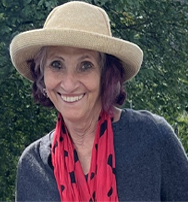 Pattie Trumble, MPP, MPH
Pattie Trumble is a nurse who worked in both California and New York for many years as an emergency room nurse. She holds a Bachelor’s Degree in Economics from the University of California, Berkeley, and an Associate Degree in Nursing from the Samuel Merritt Hospital School of Nursing. After 10 years of providing direct care, she went back to school and earned concurrent Master’s degrees in both public policy and public health from the University of California, Berkeley. Thereafter, she worked for various public health agencies in California at both the community and state levels providing economic and legislative analysis.
Popular Related Articles