5 Best DNP Programs in Maryland – 2026
Written By: Pattie Trumble, MPP, MPH
 Want to reach the very top of the nursing profession in the Old Line State? DNP programs in Maryland will set you on the path to advanced clinical practice and healthcare leadership. The demand for highly educated nurses is rising in Maryland, a state whose complex healthcare landscape includes numerous medically underserved areas in both urban and rural regions. Healthcare economists expect a spike of 42 percent in job opportunities for DNPs throughout Maryland in the next 10 years. You’ll make excellent compensation as a DNP in the Old Line State, too, with an average salary of $137,870 annually. The guide below to the 5 best DNP programs in Maryland can tell you more about your options.
WHAT ARE THE BEST DNP PROGRAMS IN MARYLAND (ONLINE & CAMPUS) FOR 2026?
Based on our Ranking Methodology, listed below are the 5 Best Doctor of Nursing Practice programs in Maryland (Online & Campus) for 2026.
1. Johns Hopkins University - Baltimore
Programs Offered: BSN-to-DNP and MSN-to-DNP
BSN-to-DNP Specialties Offered: Adult-Gerontological Acute Care Nurse Practitioner, Adult-Gerontological Primary Care Nurse Practitioner, Family Primary Care Nurse Practitioner, Pediatric Primary Care Nurse Practitioner, Pediatric Dual Primary/Acute Care Nurse Practitioner, Psychiatric Mental Health Nurse Practitioner, and Nurse Anesthesia
MSN-to-DNP Specialties Offered: Leadership, Health Policy, Planetary Health, Nursing Education, Global Health, and Artificial Intelligence
BSN-to-DNP Program Details: What's the best clinical nursing doctorate in the U.S.? According to U.S. News & World Report, it's the Doctor of Nursing Practice (DNP) program at Johns Hopkins University. Hopkins offers seven Bachelor of Science in Nursing (BSN)-to-DNP options: a 70-credit (1,000 clinical hours) BSN-to-DNP/Adult-Gerontology Acute Care Nurse Practitioner (AGACNP track), a 74-credit (1,120 clinical hours) BSN-to-DNP/Adult-Gerontology Primary Care Nurse Practitioner (AGPCNP) track, a 76-credit (1,120 clinical hours) BSN-to-DNP/Family Primary Care Nurse Practitioner (FNP) track, a 74.5-credit (1,000 clinical hours) BSN-to-DNP/Pediatric Primary Care Nurse Practitioner (PPCNP) track, a 76-credit (1,120 clinical hours) BSN-to-DNP/dual PPCNP/Pediatric Acute Care Nurse Practitioner (PACNP) track, a 76-credit (1,200 clinical hours) BSN-to-DNP/Psychiatric Mental Health Nurse Practitioner (PMHNP) track, and an 88-credit (2,352 clinical hours) BSN-to-DNP/Nurse Anesthesia program.
Courses like "Application of Biostatistical Methods for Evidence-Based Practice," "Application of the Research Process to Evidence-Based Practice," and "Advanced Clinical Data Management for Evidence-Based Practice and Performance Improvement" will prime you for a four-semester DNP project. The AGACNP, FNP, and Nurse Anesthesia tracks are taught primarily at Hopkins' campus in Baltimore, although many of the required courses will contain online content. The other four tracks are offered in a hybrid format that blends distance learning with simulation experiences and skills immersions at the university's Baltimore campus.
You'll work collaboratively with the Clinical Placement Team to identify your optimal clinical placement site. Key placement sites for NP students based in Baltimore include hospitals and medical centers affiliated with the Johns Hopkins Health System in Baltimore, such as Johns Hopkins Hospital, Johns Hopkins Bayview Medical Center, and Johns Hopkins Howard County General Hospital. Aspiring nurse anesthetists may also complete clinical rotations at hospitals in Florida, Virginia, Washington, D.C., and Pennsylvania, as well as in Maryland. Students pursuing the hybrid NP tracks will be able to complete their clinical experiences at healthcare facilities within their own communities.
The NP tracks take seven semesters (36 months) to complete; you will attend classes only during one summer semester. The Nurse Anesthesia track spans 11 semesters but still requires only 36 months to graduate. The Nurse Anesthesia track begins in the summer semester, while the six other tracks begin in the fall semester.
BSN-to-DNP Admission Requirements: Johns Hopkins University is selective about the students it accepts into its DNP programs. All applicants must have a BSN from an accredited nursing program with a grade point average of 3.0 or higher and at least one year of full-time professional nursing experience. Candidates applying to the AGACNP track must have Maryland RN licensure by the time they start clinical rotations, while candidates applying to the Nurse Anesthesia track must have RN licensure in Maryland, Virginia, Pennsylvania, Georgia, New Jersey, and Florida. Other applicants must be licensed RNs in the state where they'll be completing clinical experiences.
Nurse Anesthesia applicants must have Critical Care Registered Nurse (CCRN) certification and at least two years of professional experience in a critical care practice setting. Candidates for the dual pediatric NP track must possess Pediatric Advanced Life Support (PALS) certification and at least one year of experience in a pediatric acute care setting. AGACNP applicants must demonstrate at least one year of experience in an adult acute care setting.
MSN-to-DNP Program Details: Are you a nurse with a master's degree who aspires to drive innovation in the healthcare realm? Johns Hopkins University offers a Master's of Science in Nursing (MSN)-to-DNP program with specialization tracks in Leadership, Health Policy, Planetary Health, Nursing Education, Global Health, and Artificial Intelligence. This MSN-to-DNP program in Maryland begins in the summer semester and takes six semesters (24 months) to complete. You'll follow the same core DNP curriculum that BSN-to-DNP students take.
Most of the program is delivered online, but you can expect to visit the Baltimore campus three times during your first year for immersion experiences. The Nursing Education track entails 52 credits; the other five tracks require 49 credits. You'll also complete a minimum of 448 clinical hours at a healthcare facility in your own home state. You'll be permitted to transfer the remaining credits you need to meet the 1,000-hour DNP clinical requirement from your MSN studies.
MSN-to-DNP Admission Requirements: For acceptance into this program, you must have an MSN from an accredited nursing program with a GPA of 3.0 or higher.
Must-Know Highlights For Potential Students
• 100 percent of Johns Hopkins University's nurse practitioner grads pass their national certification exams the very first time they take them.• The DNP post-master's track at Johns Hopkins offers a joint MSN-to-DNP/Master's of Business Administration (MBA) in conjunction with the university's Carey Business School and an MSN-to-DNP/Master's of Public Health (MPH) in conjunction with the university's Bloomberg School of Public Health.
2. University of Maryland - Baltimore
Programs Offered: BSN-to-DNP and MSN-to-DNP
BSN-to-DNP Specialties Offered: Adult-Gerontology Acute Care Nurse Practitioner/Adult-Gerontology Clinical Nurse Specialist, Adult-Gerontology Primary Care Nurse Practitioner, Family Nurse Practitioner, Neonatal Nurse Practitioner, Pediatric Acute Care Nurse Practitioner, Pediatric Primary Care Nurse Practitioner, Psychiatric Mental Health Nurse Practitioner – Family, and Nurse Anesthesia
MSN-to-DNP Specialties Offered: Adult-Gerontology Acute Care Nurse Practitioner/Adult-Gerontology Clinical Nurse Specialist, Adult-Gerontology Primary Care Nurse Practitioner, Family Nurse Practitioner, Neonatal Nurse Practitioner, Pediatric Acute Care Nurse Practitioner, Pediatric Primary Care Nurse Practitioner, Psychiatric Mental Health Nurse Practitioner – Family, and Nurse Anesthesia

BSN-to-DNP Program Details: A breadth of specialties, flexible enrollment options, and excellent certification and employment outcomes make the University of Maryland-Baltimore one of the best DNP programs in Maryland. The university offers eight BSN-to-DNP concentrations: a dual AGACNP/Adult Gerontology Clinical Nurse Specialist (AGCNS) concentration, an AGPCNP concentration, an FNP concentration, a Neonatal Nurse Practitioner (NNP) concentration, a PACNP concentration, a PPCNP concentration, a PMHNP concentration, and a Nurse Anesthesia concentration. The Nurse Anesthesia track involves 93 credits (at least 2,000 clinical hours), and the PMHNP track entails 81 credits (1,035 clinical hours). The other six tracks all comprise 80 credits (1,080 clinical hours).
The curriculum blends face-to-face classes at the university's Baltimore campus with online coursework. (Note: The FNP track also offers in-person classes at the university's satellite campus in Rockville.) Basically, you'll complete your didactic DNP coursework via distance learning and your specialty hands-on training in the classroom. Core DNP courses include "Biostatistics for Evidence-based Practice," "Methods for Research and Evidence-based Practice," and "Theory for Evidence-based Practice." You'll also complete a five-semester DNP project where you'll put your newly learned research skills to work on an initiative that improves quality, safety, or outcomes in clinical or system settings.
You'll participate in clinical experiences at medical centers, hospitals, and clinics throughout the greater Baltimore region, including the University of Maryland Capital Regional Medical Center, Johns Hopkins Hospital, and the Greater Baltimore Medical Center.
If you pursue one of UMB's BSN-to-DNP nurse practitioner options full-time, you can graduate in eight semesters (32 months). The program also offers 11-semester (32 months) and 14-semester (56 months) enrollment options for its NP tracks. The Nurse Anesthesia track only accepts full-time students and takes nine semesters (36 months) to complete. New cohorts join the NP tracks in the fall semester and the Nurse Anesthesia track in the summer semester.
BSN-to-DNP Admission Requirements: Admission into this program is highly competitive. All applicants must hold a BSN from an accredited nursing program with a grade point average of 3.0 or higher and a Maryland RN license. All applicants must have a minimum of two years of professional nursing experience in the clinical setting to which they are applying. Applicants to the Nurse Anesthesia track must have at least two years of continuous, full-time Intensive Care Unit (ICU) experience and have Basic Life Support (BLS), Advanced Cardiac Life Support (ACLS), and CCRN certification.
MSN-to-DNP Program Details: Customization is the key element of the University of Maryland, Baltimore's post-master's DNP program. If you're already an Advanced Practice RN, you can enroll in a streamlined core DNP curriculum and graduate in as few as two years by completing 37 credits.
But UMB also offers the same specialty options in its post-master's clinical doctorate degree program that it provides in its post-baccalaureate clinical doctorate degree program. These MSN-to-DNP options are available to nurse practitioners who wish to add or change their area of specialty, to NPs who need to update their certifications to the current advanced practice nursing consensus model, and to MSN-educated nurses who don't have a clinical specialty. When you are accepted into any of these tracks, the university will perform a gap analysis to determine the coursework you may need to take and the number of clinical hours you may need to complete. You'll be able to transfer clinical hours from your MSN studies to meet the DNP requirement of 1,000 clinical hours.
The program is offered in a blended format that combines online coursework with in-person classes. The length of the program depends upon the track you choose. Students in a clinical specialty complete clinical experiences in Maryland, while other students may arrange clinical rotations in the state where they hold licensure. Students pursuing the Nurse Anesthesia specialty begin classes in the summer semester; all other students enter the program in the fall semester.
MSN-to-DNP Admission Requirements: For acceptance into this program, you'll need a master's degree in nursing (or a closely related field) with a GPA of 3.0 or higher and an unencumbered RN license in the state where you'll be completing clinical residencies. Required clinical experience varies by specialty pathway; see BSN-to-DNP Admission Requirements for more information.
Must-Know Highlights For Potential Students
• U.S. News & World Report rates the University of Maryland-Baltimore's DNP program as the 12th best in the United States. The prestigious ranking site also dubs UMB's AGPCNP track as the best of its kind in the nation and the university's FNP track as the ninth best.• Graduating FNP cohorts at the University of Maryland-Baltimore achieve a 100% first-time pass rate on their national certification exams.
• UMB's Nurse Anesthesia grads have a first-time pass rate of 100 percent on their National Certification Exams (NCEs).
• You don't have to have an MSN to get accepted into the University of Maryland-Baltimore's MSN-to-DNP program. UMB also accepts applicants with MPH, MBA, and Master's of Public Administration (MPA) degrees.
3. Salisbury University - Salisbury
Programs Offered: BSN-to-DNP and MSN-to-DNP
BSN-to-DNP Specialties Offered: Family Nurse Practitioner and Leadership
MSN-to-DNP Specialties Offered: Family Nurse Practitioner and Leadership

BSN-to-DNP Program Details: Salisbury University's 87-credit BSN-to-DNP/FNP and 69-credit BSN-to-DNP/Leadership tracks were designed to address Maryland's growing need for nurses in advanced practice roles. Core DNP courses like "Quality Improvement in Health Care," " Evidence-Based Practice," and "Quantitative Research in Health Care" will give you the skills and knowledge base you need to tackle a four-semester DNP project that focuses upon improving health care outcomes and providing a foundation for future scholarship. You'll also complete 1,000 clinical hours—600 hours of clinical residency in your specialty area and 400 practicum hours—researching, implementing, and evaluating your DNP project. All clinical experiences must be completed in Maryland.
The program is set up to accommodate the needs of working nurses. Courses are primarily delivered in an online format, but students pursuing the BSN-to-DNP/FNP track can expect to make occasional visits to the university's campus on Maryland's Eastern Shore for hands-on skills intensives. If you enroll full-time, you can complete the BSN-to-DNP/DNP program in four years and the BSN-to-DNP/Leadership track in three years. Both tracks accept new students in the fall semester.
BSN-to-DNP Admission Requirements: This DNP program in Maryland is open only to applicants who've earned a BSN degree while maintaining a grade point average of 3.0 or higher. (Preference is given to applicants with GPAs of 3.5 or higher.) Applicants must have a valid Maryland RN license or a compact state RN license.
MSN-to-DNP Program Details: FNP and Leadership pathways are also offered as specialty tracks when you enroll in Salisbury University's MSN-to-DNP program. If you're already an APRN, your curriculum will consist of 38 credits and can be completed in three years. If you do not already have an APRN degree, you may need to take more credits to complete the curriculum.
You'll pursue the same foundational DNP curriculum that BSN-to-DNP students take, including a DNP project. You must complete 400 practicum hours working on your DNP project. You can transfer the remaining credits you need to complete your 1,000-hour DNP requirement from your MSN studies.
MSN-to-DNP Admission Requirements: Applicants must hold a valid RN license in the state where they'll complete clinical residencies and an MSN from a nationally accredited program with a minimum GPA of 3.0.
Must-Know Highlights For Potential Students
• Salisbury University's pass rate on the family nurse practitioner certification exam is 100 percent, and many FNP graduates stay on in the region, providing healthcare to local residents.• Tuition for Salisbury University's DNP programs is charged at a flat per-credit rate that makes it a value option among regional DNP programs.
4. Uniformed Services University of the Health Sciences - Bethesda
Programs Offered: BSN-to-DNP
BSN-to-DNP Specialties Offered: Adult-Gerontology Clinical Nurse Specialist, Family Nurse Practitioner, Psychiatric Mental Health Nurse Practitioner, Women’s Health Nurse Practitioner, and Nurse Anesthesia
BSN-to-DNP Program Details: The Uniformed Services University of the Health Sciences offers a BSN‑to‑DNP program that includes five distinct specialty options: a 94-credit (1,800 clinical hours) AGCNS track, a 103-credit (1,700 clinical hours) FNP track, a 103-credit (1,700 clinical hours) Women's Health Nurse Practitioner (WHNP) track, a 98-credit (1,900 clinical hours) PMHNP track, and a 96-credit (minimum 2,500 clinical hours) Nurse Anesthesia track. Note that FNP students and WHNP students follow the same academic curriculum, but are assigned different clinical experiences so that in their third clinical residency year, WHNP students specifically work in healthcare facilities that prioritize women's health.
The academic year at the Uniformed Services University of the Health Sciences begins in the summer semester, and each DNP track is structured as a full-time, 36-month program. All five tracks share a common DNP core curriculum with courses like "Translation of Evidence for Health Care Practice, Policy, and Evaluation," "Healthcare Informatics," and "Inquiry into Statistical Methods, Evidence Based Practice and Scholarship," which culminate in a DNP project intended to gauge your ability to apply research skills and critical thinking to solving clinical and systems-based problems.
NP students typically do short clinical rotations throughout their first two years and then spend their third year pursuing a clinical residency that is much like an internship. Nurse anesthesia students pursue clinical rotations across a wide variety of perioperative, acute, and operational environments that include trauma, humanitarian missions, and other deployment‑relevant experiences.
BSN-to-DNP Admission Requirements: The Uniformed Services University of the Health Sciences only accepts commissioned officers or service-sponsored civilians in the U.S. Army, Air Force, Navy, or Public Health Service into its DNP program. Academic requirements include a BSN from an accredited nursing program and at least one year of professional nursing experience. Applicants to the Nurse Anesthesia BSN-to-DNP track must have at least two years of experience in a critical care practice setting and BLS, ACLS, and either CCRN, Certified Perioperative Nurse, or Board of Certification for Emergency Nurses certifications.
Must-Know Highlights For Potential Students
• FNP, PMHNP, and AGCNS grads at the Uniformed Services University of the Health Sciences have a first-time pass rate of 100 percent on their national certification boards.• U.S. News & World Report calls USU's Nurse Anesthesia program the best in the nation. Grads report a 100 percent first‑time pass rate on the NCE.
5. Coppin State University - Baltimore
Programs Offered: BSN-to-DNP and MSN-to-DNP
BSN-to-DNP Specialties Offered: Family Nurse Practitioner
BSN-to-DNP Program Details: Coppin State University's 70-credit BSN-to-DNP/FNP program is an eight-semester (32-month) program that admits a new cohort each fall. Courses like " Research Methods and Design for Nursing Practice," "Foundations for Evidenced Based Practice," and "Research in Nursing" will prepare you to undertake a five-semester DNP project in which you'll implement and evaluate a research-backed initiative that aims to improve outcomes in a defined population, system, or policy area.
You'll participate in 1,000 hours of clinical residency in all—700 performing supervised patient care as part of your FNP specialty and 300 researching your DNP project. You'll complete your clinical hours at healthcare facilities within the Baltimore area, including the university's very own Community Health Center. Like several other DNP programs in Maryland, Coppin State University's BSN-to-DNP track is a hybrid program; though many of your classes will be accessible online, some classes have face-to-face sessions scheduled on Fridays and Saturdays at the university's Baltimore campus.
BSN-to-DNP Admission Requirements: For admission into this program, you must have an RN license from Maryland or a compact state and a BSN from an accredited nursing program with a GPA of 3.0 or higher.
MSN-to-DNP Program Details: Coppin State University's streamlined MSN-to-DNP curriculum is ideal for master's-prepared nurses seeking to expand their professional opportunities and advance into leadership roles. The 30-credit curriculum mirrors the BSN-to-DNP program's foundational DNP curriculum. You must complete a minimum of 300 hours of research for your DNP project; you'll transfer the remaining 700 hours needed to meet DNP requirements from your MSN degree program. Like the BSN-to-DNP program, this program may require you to spend classroom time at the university's campus in Baltimore in addition to your online studies. You'll start the program in the fall semester and graduate in six semesters (24 months).
MSN-to-DNP Admission Requirements: Applicants must hold a Master's degree in nursing from an accredited nursing program, with a GPA of 3.25 or higher, and a valid Maryland RN license.
Must-Know Highlights For Potential Students
• While Coppin State University is a historically Black university, its doors are open to students of all races and ethnicities.• Coppin State University's DNP curriculum has a unique emphasis on primary care within urban communities.
FREQUENTLY ASKED QUESTIONS ANSWERED
1. Who Accredits DNP Programs In Maryland?
| S.No. | Accrediting Agency |
| 1 | Accreditation Commission for Education in Nursing (ACEN) |
| 2 | Commission on Collegiate Nursing Education (CCNE) |
2. How Many Schools Offer Accredited DNP Programs In Maryland?
| 5 |
3. What Is The Average DNP Salary In Maryland?
| Hourly | $66.28 |
| Weekly | $2,651 |
| Monthly | $11,490 |
| Annual | $137,870 |
4. On Average, How Much Do Entry-Level DNP Graduates Make In Maryland?
| Hourly | $48.76 |
| Weekly | $1,951 |
| Monthly | $8,450 |
| Annual | $101,430 |
5. On Average, How Much Do Experienced DNP Graduates Make In Maryland?
| Level of Experience | Hourly | Weekly | Monthly | Annual |
| 1-4 Years of Experience | $55.18 | $2,207 | $9,560 | $114,770 |
| 5-9 Years of Experience | $65.13 | $2,605 | $11,290 | $135,480 |
| 10-19 Years of Experience | $72.53 | $2,901 | $12,570 | $150,870 |
| 20 Years or More Experience | $86.68 | $3,467 | $15,030 | $180,300 |
6. What Is The Average DNP Salary In Maryland By Metro?
| Metro | Hourly | Weekly | Monthly | Annual |
| Baltimore-Columbia-Towson | $66.63 | $2,665 | $11,550 | $138,600 |
| California-Lexington Park | $59.70 | $2,388 | $10,350 | $124,170 |
| Cumberland | $62.51 | $2,500 | $10,840 | $130,020 |
| Hagerstown-Martinsburg | $57.85 | $2,314 | $10,030 | $120,330 |
| Salisbury | $67.74 | $2,710 | $11,740 | $140,900 |
7. Average DNP Salary In Maryland VS. Average Salaries Of Other Closely Related Occupations In Maryland
| Job Title | Average Annual Salary | Difference | |
| Number | % | ||
| Podiatrist | $239,460 | -$101,590 | -42.42% |
| Dentist | $234,670 | -$96,800 | -41.25% |
| Optometrist | $166,770 | -$28,900 | -17.33% |
| Nurse With DNP | $137,870 | $0 | 0.00% |
| Pharmacist | $132,530 | +$5,340 | +4.03% |
| Physician Assistant | $117,280 | +$20,590 | +17.56% |
| Physical Therapist | $105,520 | +$32,350 | +30.66% |
| Occupational Therapist | $101,710 | +$36,160 | +35.55% |
| Dental Hygienist | $101,140 | +$36,730 | +36.32% |
| Radiation Therapist | $98,220 | +$39,650 | +40.37% |
| Speech-Language Pathologist | $95,310 | +$42,560 | +44.65% |
| Audiologist | $90,180 | +$47,690 | +52.88% |
| Chiropractor | $73,940 | +$63,930 | +86.46% |
 Pattie Trumble, MPP, MPH
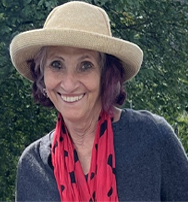
Pattie Trumble is a nurse who worked in both California and New York for many years as an emergency room nurse. She holds a Bachelor’s Degree in Economics from the University of California, Berkeley, and an Associate Degree in Nursing from the Samuel Merritt Hospital School of Nursing. After 10 years of providing direct care, she went back to school and earned concurrent Master’s degrees in both public policy and public health from the University of California, Berkeley. Thereafter, she worked for various public health agencies in California at both the community and state levels providing economic and legislative analysis.
Popular Related Articles