Pediatric Nurse Practitioner Programs in North Carolina (Online & Campus) – 2026
Written By: Darby Faubion RN, BSN, MBA
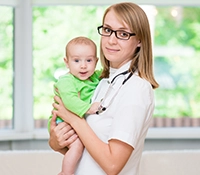 In North Carolina, pediatric nurse practitioners are in high demand and make excellent salaries. In just one decade, the number of employment opportunities available to PNPs will rise by 55 percent, and PNPs make $119,400 a year. More importantly, though, PNPs fill a growing need for specialized pediatric care since, anatomically and physiologically, children are very different from adults. Graduates of pediatric nurse practitioner programs in North Carolina can elect to specialize in acute or primary care. Interested in learning more about this dynamic career choice? The guide below to the best pediatric nurse practitioner programs in North Carolina is an excellent resource.
FOLLOWING ARE THE PEDIATRIC NURSE PRACTITIONER PROGRAMS IN NORTH CAROLINA (ONLINE & CAMPUS) FOR 2026
(Based on our Ranking Methodology, we have ranked the campus-based and online Pediatric Nurse Practitioner programs in North Carolina.)
1. Duke University School of Nursing - Durham
Programs Offered: MSN and Post-Graduate Certificate
MSN Specialties Offered: Pediatric Nurse Practitioner – Primary Care and Pediatric Nurse Practitioner – Acute Care
Post-Graduate Certificate Specialties Offered: Pediatric Nurse Practitioner – Primary Care and Pediatric Nurse Practitioner – Acute Care
MSN Program Details: Choosing to pursue a graduate degree in nursing is more than an academic decision; it is a commitment to your future that allows you to impact others positively. I have worked in several specialty areas in my years as both a nurse and nurse educator, and pediatrics is one of my favorites! For me, caring for the youngest and most vulnerable patients is a reward in itself. If you are a registered nurse with a love for pediatric care who is searching for master’s-level pediatric nurse practitioner programs in North Carolina, Duke University School of Nursing is an excellent option!
The program admits students annually in the fall semester. The MSN Pediatric Nurse Practitioner program offers two tracks: the Pediatric Acute Care Nurse Practitioner and the Pediatric Primary Care Nurse Practitioner. The distance-based format makes this program an excellent choice for working professionals.
The Acute Care PNP pathway features a 43-credit curriculum, and the Primary Care option requires 44 credits. The curriculum blends rigorous didactic instruction with hands-on training through simulated lab experiences, Nurse Practitioner Intensive (NPI) workshops focused on care management, leadership, and collaboration, and in-person clinical practicums. As a student in this program, you will study Advanced Physiology/Pathophysiology Across the Lifespan, Clinical Pharmacology for Advanced Practice Nursing, and Pediatric Developmental, Behavioral, & Mental Health Assessment & Management. Each pathway includes NPI courses and a minimum of 616 clinical hours.
MSN Admission Requirements: Candidates for the MSN pediatric nurse practitioner program must have earned a Bachelor of Science in Nursing from an accredited school of nursing or an associate’s degree in nursing plus a non-nursing bachelor’s degree and a current RN license in the state where practice will occur. Applicants are required to submit three professional recommendations, a Personal Statement, a resume and/or curriculum vitae, and all post-secondary transcripts from each school where college credit was earned. Transcripts should show completion of an Introductory Statistics or General Statistics class with a grade of “C” or better. Preferential consideration is given to applicants with a cumulative GPA of 3.0 or higher on a 4.0 grading scale.
Post-Graduate Certificate Program Details: The Post-Graduate Certificate program at Duke University School of Nursing offers opportunities for registered nurses with a graduate degree to pursue certification in a patient population. Students in the program are required to meet the same expected outcomes as students in the MSN program. However, some didactic courses may be waived via a formal GAP analysis. After analysis of your previous graduate transcripts is complete, an individual plan of study will be developed, which will include concentration-specific courses and at least 500 supervised, direct patient care clinical hours.
Post-Graduate Certificate Admission Requirements: Admission to the Post-Graduate Certificate program is available to registered nurses who have previously earned a master’s degree from an ACEN- or CCNE-accredited nursing school or who possess a master’s degree in another discipline acceptable to the Program Director. Candidates must have a license or eligibility for licensure as a professional registered nurse in North Carolina or a Compact State.
One year of clinical nursing experience is recommended before matriculation. Applicants are required to provide all college and university transcripts. A General Statistics or Introductory Statistics course with a grade of “C” or higher and completion of a course in Descriptive and Inferential Statistics are required. Additionally, prospective students must provide three letters of recommendation and participate in a personal interview with program faculty.
Must-Know Highlights For Potential Students
• One of the greatest perks of pursuing your degree through Duke University’s School of Nursing is the school’s access to a world-class clinical network. As a student in the pediatric nurse practitioner program at Duke, you will benefit from diverse clinical placements in settings from regional pediatric centers to the Duke University Hospital. Additionally, if you prefer to complete your clinical assignments closer to home, program faculty will help identify sites and preceptors near your home region.• Duke University’s School of Nursing is known for interdisciplinary collaboration, cutting-edge research, and its support of progress in healthcare. When you pursue your degree at Duke, you will experience a culture that values integrity, impact, and inquiry, learning to prevent disease, promote wellness, and advocate for systemic change in pediatric care.
• As a nurse and healthcare educator, I believe all nurses should commit to lifelong learning. One of the awesome things about Duke University’s School of Nursing is that you can solidify your experience and passion for nursing by earning clinical nursing certificates that complement your interests. For instance, the school offers Clinical Nursing Certificates in cardiology, endocrinology, oncology, and orthopedics.
• Clinical experience is an integral part of any high-quality pediatric nurse practitioner program. At Duke University, the dedicated Clinical Placement Office functions as a liaison between students, the School of Nursing, clinical sites, and preceptors, collaborating to ensure appropriate precepted training experiences.
• Duke University’s School of Nursing is consistently ranked among the top nursing schools in the U.S. The school has a reputation for leadership in healthcare, as well as academic rigor and innovation. The faculty comprises nationally recognized clinicians, scholars, and researchers who are dedicated to mentoring and promoting the success of future generations of nurses!
2. The University of North Carolina at Chapel Hill - Chapel Hill
Programs Offered: MSN, BSN-to-DNP, and Post-Graduate Certificate
MSN Specialties Offered: Pediatric Nurse Practitioner - Primary Care
BSN-to-DNP Specialties Offered: Pediatric Nurse Practitioner - Primary Care
Post-Graduate Certificate Specialties Offered: Pediatric Nurse Practitioner - Primary Care
MSN Program Details: If you are a registered nurse with aspirations of becoming a Pediatric Primary Care Nurse Practitioner, the University of North Carolina at Chapel Hill offers an excellent program worth considering. One pathway the school offers is the Master of Science in Nursing. The program features online coursework, laboratory simulations, and in-person clinicals. Part-time and full-time study options are available, making it easy for you to choose a timeframe that works best for you.
The MSN Pediatric Primary Care NP program features a 41-credit curriculum. The plan of study consists of classes, including Advanced Diagnostic Reasoning, Care of Children with Complex Health Conditions, Evidence-Based Practice and Research, and Pharmacotherapeutics. The program includes a minimum of 540 clinical hours.
MSN Admission Requirements: To be considered for admission to the MSN program, candidates must hold a Bachelor of Science in Nursing from an ACEN- or CCNE-accredited nursing program by the summer prior to matriculation and have an active, unencumbered license to practice as a registered nurse in North Carolina or a Compact State. All applicants must have a minimum BSN grade point average of at least 2.75, with priority given to candidates whose GPA is 3.0 or higher. At least six months of full-time clinical work experience as a registered nurse in a pediatric or neonatal setting, or in a community setting dealing with children and families, is required.
BSN-to-DNP Program Details: The BSN-to-DNP pediatric nurse practitioner program in North Carolina at UNC-Chapel Hill offers the opportunity to earn a terminal nursing degree, specializing in the primary care of patients from birth to 21 years of age. The program can be completed in three years of full-time study, or in four years, if you enroll part-time.
The program is a 68-credit pathway that includes at least 1,000 clinical hours. The UNC-Chapel Hill pediatric nurse practitioner program offers access to some of the most respected pediatric care settings. You will have opportunities to train at the University of North Carolina Children’s Hospital, which is a leading academic medical center, as well as community health clinics, school-based health programs, and rural and underserved pediatric practices throughout North Carolina.
BSN-to-DNP Admission Requirements: Prospective students seeking admission to the BSN-to-DNP program are required to hold a BSN from an accredited nursing program, have an unrestricted RN license in North Carolina or a Compact State, and have at least six months of work experience as an RN in a pediatric, neonatal, or community setting that serves children and families. Applicants are required to submit official college/university transcripts reflecting a preferred 3.0 cumulative GPA and completion of an introductory statistics course with a grade of “B” or better. Applicants with a GPA between 2.75 and 2.99 may be considered on a space-available basis but must offer a strong justification for their GPA.
Post-Graduate Certificate Program Details: The Pediatric Nurse Practitioner Post-Graduate Certificate program at the University of North Carolina at Chapel Hill is designed to allow master’s and doctoral-prepared Advanced Practice Registered nurses to pursue education and training in the Pediatric Nurse Practitioner Primary Care specialization. The PGC program is offered in a part-time, online format, making it an excellent choice for working nurses.
The Pediatric NP Post-Graduate Certificate program requires the completion of at least 18 credits and 500 clinical hours. After a review of your previous graduate transcripts, additional credits may be added to your plan of study to meet the criteria for earning the certificate.
Post-Graduate Certificate Admission Requirements: Eligible candidates for the Post-Graduate Certificate program will have earned a Master of Science in Nursing or Doctor of Nursing Practice degree from an ACEN- or CCNE-accredited nursing program. All applicants must hold a current certification as an Advanced Practice Registered Nurse and be eligible for approval to practice in North Carolina. Candidates must submit one letter of recommendation from a current, immediate supervisor, a Professional Statement, a curriculum vitae or resume, and official transcripts from all colleges or universities previously attended.
Must-Know Highlights For Potential Students
• At the University of North Carolina at Chapel Hill, you can feel confident that the education you receive is top-notch. The School of Nursing is recognized for producing leaders in advanced nursing practice. In fact, employers in North Carolina and across the Southeast region of the United States often prioritize UNC graduates for advanced practice roles, including Pediatric Nurse Practitioner positions.• The UNC-Chapel Hill School of Nursing has a reputation for excellence in nursing education. You will learn in an environment that values evidence-based care and innovation, and that promotes positive student, patient, and professional outcomes.
• One of the things I am truly passionate about is identifying and addressing health disparities, especially among the pediatric patient population. One of the things I find appealing about the pediatric nurse practitioner program at UNC-Chapel Hill is its mission-driven approach to pediatric healthcare. The School of Nursing provides opportunities for students to engage in community-based service learning, participate in public health initiatives, and advocate for policy changes at local, state, and national levels.
• Graduates of the University of North Carolina-Chapel Hill PNP program have outstanding job placement rates. Many alums go on to work in primary care practices, school health programs, public health departments, children’s hospitals, and pediatric specialty clinics. Further, the UNC Health System spans over 900 clinics and 14 hospitals statewide and actively recruits advanced practice providers, including program graduates!
• Financing a graduate nursing education can be challenging. However, at Duke University School of Nursing, financial aid advisors are available to help identify resources that make pursuing your degree possible. In addition to federal loan options, there is a broad range of opportunities, including Non-Duke Funded Scholarships and National Scholarship Resources.
HOW MUCH DO PEDIATRIC NURSE PRACTITIONER GRADUATES MAKE IN NORTH CAROLINA?
WHAT STARTING SALARY CAN NEW GRADUATES OF PEDIATRIC NURSE PRACTITIONER PROGRAMS IN NORTH CAROLINA EXPECT?
| Hourly | $42.23 |
| Weekly | $1,689 |
| Monthly | $7,320 |
| Annual | $87,840 |
HOW MUCH CAN GRADUATES OF PEDIATRIC NURSE PRACTITIONER PROGRAMS IN NORTH CAROLINA EARN WITH EXPERIENCE?
| Level of Experience | Hourly | Weekly | Monthly | Annual |
| Entry-Level | $42.23 | $1,689 | $7,320 | $87,840 |
| 1-4 Years of Experience | $47.78 | $1,911 | $8,280 | $99,390 |
| 5-9 Years of Experience | $56.41 | $2,256 | $9,780 | $117,330 |
| 10-19 Years of Experience | $62.82 | $2,513 | $10,890 | $130,660 |
| 20 Years or More Experience | $75.07 | $3,003 | $13,010 | $156,140 |
WHAT IS THE AVERAGE PEDIATRIC NURSE PRACTITIONER SALARY IN NORTH CAROLINA?
| Hourly | $57.40 |
| Weekly | $2,296 |
| Monthly | $9,950 |
| Annual | $119,400 |
HOW MUCH DO PEDIATRIC NURSE PRACTITIONERS EARN IN THE VARIOUS METROS OF NORTH CAROLINA?
| Metro | Hourly | Weekly | Monthly | Annual |
| Asheville | $54.43 | $2,177 | $9,430 | $113,210 |
| Burlington | $56.28 | $2,251 | $9,760 | $117,060 |
| Charlotte-Concord-Gastonia | $58.22 | $2,329 | $10,090 | $121,090 |
| Durham-Chapel Hill | $60.79 | $2,432 | $10,540 | $126,450 |
| Fayetteville | $52.88 | $2,115 | $9,170 | $110,000 |
| Goldsboro | $48.83 | $1,953 | $8,460 | $101,560 |
| Greensboro-High Point | $56.93 | $2,277 | $9,870 | $118,410 |
| Greenville | $53.95 | $2,158 | $9,350 | $112,210 |
| Hickory-Lenoir-Morganton | $55.14 | $2,206 | $9,560 | $114,700 |
| Jacksonville | $57.00 | $2,280 | $9,880 | $118,570 |
| New Bern | $51.11 | $2,044 | $8,860 | $106,310 |
| Raleigh | $57.58 | $2,303 | $9,980 | $119,760 |
| Rocky Mount | $51.92 | $2,077 | $9,000 | $107,990 |
| Wilmington | $54.00 | $2,160 | $9,360 | $112,330 |
| Winston-Salem | $62.59 | $2,503 | $10,850 | $130,180 |
PEDIATRIC NURSE PRACTITIONER SALARY IN NORTH CAROLINA VS. OTHER SALARIES
PEDIATRIC NURSE PRACTITIONER SALARY IN NORTH CAROLINA VS. PEDIATRIC NURSE PRACTITIONER SALARY IN THE NATION
| Average North Carolina Pediatric NP Annual Salary | Average National Pediatric NP Annual Salary | Difference | |
| Number | % | ||
| $119,400 | $126,175 | -$6,775 | -5.37% |
PEDIATRIC NURSE PRACTITIONER SALARY IN NORTH CAROLINA VS. PEDIATRIC NURSE PRACTITIONER SALARIES IN OTHER STATES
| State | Average Annual Salary | Difference | |
| Number | % | ||
| California | $158,630 | -$39,230 | -24.73% |
| Nevada | $145,990 | -$26,590 | -18.21% |
| Washington | $142,780 | -$23,380 | -16.37% |
| New Jersey | $142,420 | -$23,020 | -16.16% |
| Oregon | $142,340 | -$22,940 | -16.12% |
| Massachusetts | $141,420 | -$22,020 | -15.57% |
| New York | $140,260 | -$20,860 | -14.87% |
| Connecticut | $134,510 | -$15,110 | -11.23% |
| New Mexico | $134,310 | -$14,910 | -11.10% |
| Minnesota | $132,580 | -$13,180 | -9.94% |
| District of Columbia | $132,420 | -$13,020 | -9.83% |
| Rhode Island | $131,060 | -$11,660 | -8.90% |
| Hawaii | $130,220 | -$10,820 | -8.31% |
| Arizona | $130,170 | -$10,770 | -8.27% |
| Delaware | $128,750 | -$9,350 | -7.26% |
| Iowa | $128,460 | -$9,060 | -7.05% |
| New Hampshire | $128,380 | -$8,980 | -6.99% |
| Texas | $127,670 | -$8,270 | -6.48% |
| Wisconsin | $126,020 | -$6,620 | -5.25% |
| Maryland | $125,680 | -$6,280 | -5.00% |
| Utah | $125,520 | -$6,120 | -4.88% |
| North Dakota | $125,460 | -$6,060 | -4.83% |
| Pennsylvania | $125,150 | -$5,750 | -4.59% |
| Illinois | $124,610 | -$5,210 | -4.18% |
| Alaska | $123,900 | -$4,500 | -3.63% |
| Vermont | $123,830 | -$4,430 | -3.58% |
| Montana | $122,390 | -$2,990 | -2.44% |
| Idaho | $122,310 | -$2,910 | -2.38% |
| Oklahoma | $122,090 | -$2,690 | -2.20% |
| Wyoming | $121,330 | -$1,930 | -1.59% |
| Indiana | $121,100 | -$1,700 | -1.40% |
| Maine | $120,720 | -$1,320 | -1.09% |
| Ohio | $120,660 | -$1,260 | -1.04% |
| Colorado | $119,790 | -$390 | -0.33% |
| Nebraska | $119,490 | -$90 | -0.08% |
| North Carolina | $119,400 | $0 | 0.00% |
| Georgia | $118,970 | +$430 | +0.36% |
| South Dakota | $118,800 | +$600 | +0.51% |
| Virginia | $118,690 | +$710 | +0.60% |
| Michigan | $118,510 | +$890 | +0.75% |
| Florida | $117,550 | +$1,850 | +1.57% |
| Kansas | $117,120 | +$2,280 | +1.95% |
| Louisiana | $116,530 | +$2,870 | +2.46% |
| Mississippi | $115,370 | +$4,030 | +3.49% |
| South Carolina | $114,830 | +$4,570 | +3.98% |
| Missouri | $114,580 | +$4,820 | +4.21% |
| West Virginia | $111,410 | +$7,990 | +7.17% |
| Arkansas | $111,370 | +$8,030 | +7.21% |
| Kentucky | $108,380 | +$11,020 | +10.17% |
| Alabama | $108,040 | +$11,360 | +10.51% |
| Tennessee | $101,850 | +$17,550 | +17.23% |
PEDIATRIC NURSE PRACTITIONER SALARY IN NORTH CAROLINA VS. OTHER NURSE SALARIES IN NORTH CAROLINA
| Type of Nurse | Average Annual Salary | Difference | |
| Number | % | ||
| Nurse Anesthetist | $222,560 | -$103,160 | -46.35% |
| Pediatric Nurse Practitioner | $119,400 | $0 | 0.00% |
| Nurse Midwife | $118,660 | +$740 | +0.62% |
| Registered Nurse | $82,530 | +$36,870 | +44.67% |
| Nursing Instructor and Teacher, Post-secondary | $76,970 | +$42,430 | +55.13% |
| Licensed Practical and Licensed Vocational Nurse | $57,760 | +$61,640 | +106.72% |
| Nursing Assistant | $35,340 | +$84,060 | +237.86% |
PEDIATRIC NURSE PRACTITIONER SALARY IN NORTH CAROLINA VS. SALARIES OF OTHER CLOSELY RELATED OCCUPATIONS IN NORTH CAROLINA
| Job Title | Average Annual Salary | Difference | |
| Number | % | ||
| Podiatrist | $207,300 | -$87,900 | -42.40% |
| Dentist | $204,980 | -$85,580 | -41.75% |
| Optometrist | $171,170 | -$51,770 | -30.24% |
| Pharmacist | $134,600 | -$15,200 | -11.29% |
| Veterinarian | $126,700 | -$7,300 | -5.76% |
| Physician Assistant | $123,860 | -$4,460 | -3.60% |
| Pediatric Nurse Practitioner | $119,400 | $0 | 0.00% |
| Radiation Therapist | $104,100 | +$15,300 | +14.70% |
| Physical Therapist | $95,150 | +$24,250 | +25.49% |
| Occupational Therapist | $88,510 | +$30,890 | +34.90% |
| Chiropractor | $85,320 | +$34,080 | +39.94% |
| Speech-Language Pathologist | $84,650 | +$34,750 | +41.05% |
| Audiologist | $83,920 | +$35,480 | +42.28% |
| Dental Hygienist | $82,780 | +$36,620 | +44.24% |
FREQUENTLY ASKED QUESTIONS ANSWERED
1. Who Accredits Pediatric Nurse Practitioner Programs In North Carolina?
| S.No. | Accrediting Agency |
| 1 | Accreditation Commission for Education in Nursing (ACEN) |
| 2 | Commission on Collegiate Nursing Education (CCNE) |
2. How Many Accredited Pediatric Nurse Practitioner Schools Are There In North Carolina?
| 2 |
3. On Average, How Much Does A Pediatric NP Make Per Hour In North Carolina?
| $57.40 |
4. On Average, How Much Does A Pediatric NP Make Per Week In North Carolina?
| $2,296 |
5. On Average, How Much Does A Pediatric NP Make Per Month In North Carolina?
| $9,950 |
6. On Average, How Much Does A Pediatric NP Make Per Year In North Carolina?
| $119,400 |
7. What Is The Job Outlook For Pediatric Nurse Practitioners In North Carolina?
| 10-Year Job Outlook (2020-2030) |
| +55.49% |
 Darby Faubion, RN, BSN, MBA
Darby Faubion is a seasoned nurse, educator, and healthcare writer whose career spans nearly three decades of clinical practice, academic instruction, curriculum development, and student mentorship. Based in Louisiana, Darby has always sought to bring the warmth, resilience, and cultural richness of her home state into every aspect of her work—whether teaching future nurses, supporting families through vulnerable moments, guiding students toward success on the NCLEX, or providing insight about top nursing programs and tips for success.
Best Pediatric Nurse Practitioner Programs in Other States