10 Best Psychiatric Nurse Practitioner Programs in California (Online & Campus) – 2026
Written By: Pattie Trumble, MPP, MPH
 Following the COVID-19 pandemic, California’s mental health crisis has grown even more acute, but as a graduate of one of the PMHNP programs in California, you’ll be prepared to help tackle it. California’s psychiatric-mental health nurse practitioners provide a wide range of mental health services. In California, they earn $168,230 a year on average, and employment opportunities are expected to surge 55 percent over the next decade. Many of the Golden State’s PMHNP programs are offered online so that you won’t have to give up your current job to go back to school. Keep reading to learn about the 10 best psychiatric nurse practitioner programs in California for 2026.
FOLLOWING ARE THE 10 BEST PSYCHIATRIC NURSE PRACTITIONER PROGRAMS IN CALIFORNIA (ONLINE & CAMPUS) FOR 2026
(Based on our Ranking Methodology, we have ranked the 10 best campus-based and online PMHNP programs in California.)
1. University of California San Francisco - San Francisco
Programs Offered: BSN-to-DNP and Postgraduate Certificate

BSN-to-DNP Program Details: The University of California-San Francisco’s Psychiatric-Mental Health Nurse Practitioner pathway is offered as part of its Bachelor of Science in Nursing (BSN)-to-Doctor of Nursing Practice (DNP) program. This PMHNP program in California takes seven quarters (21 months) to complete and typically involves 67 credits. All courses must be completed in sequence.
In your first year, you’ll take core DNP courses like “Concepts and Contemporary Issues for Advanced Practice,” “Principles of Clinical Prevention and Population Health for Evidence-Based Practice,” and “Advanced Health Assessment Concepts.” Coursework is offered online using synchronous technology except for clinical rotations and three 2- to 3-day in-person skills immersions. You can expect to spend 15 to 18 hours a week on your studies.
In your second year, you’ll take courses focusing more specifically on psychiatric-mental health nurse practice and complete a scholarly capstone project. You’ll spend 16 to 24 hours a week pursuing your clinical practicum for a total of 810 hours.
Coursework begins in the summer. Applicants must hold an unencumbered RN license and a BSN degree with a minimum undergraduate grade point average of 3.0. You must submit four letters of recommendation and a resume or curriculum vitae with your application.
Postgraduate Certificate Program Details: UCSF’s postgraduate PMHNP certificate is designed for advanced practice NPs who want to add a specialization in mental health to their skill sets. It’s a pared-down version of the PMHNP degree programs’ curriculum without any of the core APRN coursework. The program takes four consecutive quarters (one year) to complete. The program typically begins in the fall quarter.
Classes like “Psychopharmacology Across the Lifespan,” “Psychotherapeutic Interventions Across the Lifespan,” and “PMHNP Role Development & Clinical Decision Making” are taught online. You will also participate in three immersion sessions and four clinical residencies (one each quarter). The program will try to schedule your clinical residencies at healthcare facilities in your own community.
Must-Know Highlights For Potential Students
• UCSF also offers its PMHNP track in conjunction with its Master’s of Science in Nursing (MSN) program. U.S. News & World Report considers UCSF’s MSN-PMHNP track the sixth-best in the nation.• BSN-DNP/PMHNP clinical rotations are scheduled at Zuckerberg San Francisco General Hospital, UCSF Langley Porter Psychiatric Hospital and Clinics, the VA, San Francisco Department of Public Health, Sutter Health, Palo Alto Medical Foundation, Marin County Mental Health Services, and other prestigious healthcare facilities throughout the San Francisco Bay Area.
• UCSF’s postgraduate PMHNP certificate is offered in collaboration with UC Davis, UC Irvine, and UCLA.
2. University of San Diego - San Diego
Programs Offered: MSN and BSN-to-DNP

MSN Program Details: You’ll need an unrestricted California RN license and at least one year of registered nursing experience to apply to the University of San Diego’s 54-credit MSN/PMHNP program. Candidates will also need to submit a resume or curriculum vitae, a statement of purpose, a writing sample, and two letters of recommendation.
The curriculum includes core MSN courses like “Role of the Nurse Practitioner” and “Advanced Health Assessment,” as well as courses related to the psychiatric-mental health nurse practitioner specialty like “Psychopharmacology and Clinical Management of Psychiatric Disorders” and “Diagnostics and Management of Mental Health Conditions Across the Lifespan I & II.” If you enroll in this PMHNP program in California full-time, you can earn your degree in five semesters (20 months). Part-time students will be able to complete the curriculum in seven semesters (32 months) with no classes during the summer of the first year.
All classes are taught at USD’s campus, two miles north of downtown San Diego. You’ll be responsible for completing 768 clinical hours. Clinical practicum sites include many prestigious healthcare facilities throughout the greater San Diego area, such as Kaiser Permanente, UCSD Medical Center, and El Centro Regional Medical Center.
BSN-to-DNP Program Details: The University of San Diego’s 77-credit BSN-to-DNP/PMHNP program focuses on leadership and healthcare policy in addition to clinical training. Core DNP courses include “Leadership, Advocacy, and Quality Improvement,” “Data Analysis and Evaluation,” and “Role of the Nurse with a Doctor of Nursing Practice”. You must complete a minimum of 1,000 clinical hours at healthcare facilities in the San Diego metro region. You’ll also be tasked with carrying out a five-semester scholarly project that demonstrates your ability to apply the knowledge and skills you’ve learned in the classroom to a real-world challenge.
Full-time students can complete this curriculum in 8 semesters (20 months), including two summers; part-time students will take 11 semesters (32 months). Most lecture courses are delivered via a distance-learning platform, but you must attend campus-based intensives, and participation in all clinical practicums must be in person. All applicants must be licensed in California and have a Bachelor of Science in Nursing degree with a GPA of 3.0 or higher. You must submit two letters of recommendation, a writing sample, and a personal statement with your application.
Must-Know Highlights For Potential Students
• While the University of San Diego is a Catholic University, the school welcomes students of all faiths. Catholic tenets inform the university’s values but do not influence the education it imparts.• USD houses the Betty and Bob Beyster Institute for Nursing Research, Advanced Practice, and Simulation, which focuses on research related to human aging.
3. University of San Francisco - San Francisco
Programs Offered: DNP (BSN-to-DNP & MSN-to-DNP) and Certificate (Family Psychiatric-Mental Health Nurse Practitioner)

BSN-to-DNP Program Details: Completing the University of San Francisco's 78-credit BSN-to-DNP/ Psychiatric-Mental Health Nurse Practitioner track will take 11 semesters (four years). Core nursing courses like "Evidence-Based Scholarship I & II," "Professional Roles for the Nurse Practitioner," and "Management of Financial Resources" will prepare you for nursing leadership role, while the APRN curriculum will teach you how to assess, diagnose, treat, and manage patients with acute and chronic psychiatric, emotional, and behavioral issues. The program also involves developing and submitting a scholarly manuscript, which requires you to identify a practice-related issue, implement an evidence-based intervention, and evaluate that intervention's outcomes.
The curriculum balances campus-based and distance learning. The PMHNP curriculum is taught online using synchronous technology on weekends to accommodate the needs of working students. You'll complete 1,000 to 1,200 clinical hours at healthcare facilities throughout the Greater Metropolitan Bay Area. Expect to spend between 15 and 20 hours a week on your coursework.
Courses start in the fall semester. Applicants must have a California RN license and a BSN from an accredited school with a grade point average of 3.0 or higher. You must submit three letters of recommendation, a resume, and a statement of professional goals with your application.
MSN-to-DNP Program Details: USF's 72-credit MSN-to-DNP/PMHNP curriculum is similar to its BSN-to-DNP/PMHNP curriculum but excludes many APRN courses RNs typically take while pursuing their nursing master's. You'll take foundational classes like "Project Management," "Environmental and Occupational Effects on Health," and "Policy and Ethics in Population Health". This DNP/ PMHNP pathway begins in the fall and lasts eight semesters.
As with the longer DNP track, you must complete a scholarly project, and your final semester will be a full-immersion residency at a San Francisco Bay Area-based community agency, healthcare system, or private-sector business. You may be able to apply some of your MSN practicum hours toward your DNP degree, so the total number of hours you'll be responsible for completing will range from 500 to 1,000 hours.
Applicants must have a master's degree in nursing to apply to this program. Otherwise, admission requirements are identical to those for its BSN-to-DNP/PMHNP program.
Certificate Program Details: Are you an advanced practice DNP who wants to add mental health nursing to your repertoire of skills? You can earn the University of San Francisco's Family Psychiatric Mental Health Nurse Practitioner Certificate in just a single year (four semesters).
The program entails 21 to 35 credits, depending upon the APRN coursework you may already have completed. The clinical requirement is 500 hours. Coursework is delivered in a hybrid format that emphasizes weekend classes to best accommodate the needs of working students. This program is only open to nurses with a DNP or a PhD.
Must-Know Highlights For Potential Students
• The University of San Francisco is a Jesuit institution. While its nursing curriculum reflects the Catholic values of justice, dignity, and inclusiveness, Catholic teachings are not explicitly incorporated into the university's educational offerings.• Interested in mental health crises as a public health challenge? USF is one of the few PMHNP programs in California that offers dual DNP/PMHNP and Master's of Public Health degrees.
4. Charles R. Drew University of Medicine and Science - Los Angeles
Programs Offered: MSN and Post Master's Certificate

MSN Program Details: The 59-credit Master of Science in Nursing/Psychiatric Mental Health Nurse Practitioner Program at Charles R. Drew University of Medicine and Science takes just five semesters (16 months) to complete. Theory coursework is taught one weekend every month to address the needs of students with jobs; other classes are presented in a hybrid format combining the Internet with face-to-face learning at the university's campus in the Los Angeles suburb of Willowbrook.
You'll complete 630 clinical hours at healthcare facilities like Kedren Acute Psychiatric Hospital, UCLA Neuropsychiatry, and Harbor UCLA. In addition to learning how to diagnose and treat psychiatric and behavioral conditions, you'll take core MSN courses like "Advanced Physical Assessment," "Advanced Nursing Theory," and "Health Systems Management."
You can begin this program in either the fall, spring, or summer semesters. To apply, you'll need a BSN from an accredited nursing school with an undergraduate GPA of 3.0 or higher and an unrestricted California RN license. All applications must be accompanied by a resume or CV, two letters of recommendation, and a personal statement.
Post Master's Certificate Program Details: If you already have a nursing master's degree and are looking to build out your advanced practice skill set, Charles R. Drew University of Medicine and Science's post master's PMHNP certificate is for you. Coursework focuses on the essentials of psychiatric-mental health nurse practice but does not include nursing theory. You'll be able to complete the 47-credit curriculum in four semesters (16 months), taking classes like "Primary/Mental Health Care I & II" and "Psychotherapy with Groups and Family."
You'll be responsible for completing 585 hours of clinical rotations. This psychiatric-mental health nurse practitioner track is only open to applicants with an MSN degree from an accredited college or university.
Must-Know Highlights For Potential Students
• Interested in health equity? The Charles R. Drew University of Medicine and Science may be one of the best PMHNP programs in California for teaching providers how to address and reduce the health disparities that exist between different populations. The university was founded in 1966 in response to inadequate healthcare access in Los Angeles's Watts neighborhood. The university focuses on preparing practitioners to work in medically underserved areas.• Though Charles E. Drew University is a historically Black university—and home to one of only four historically Black medical schools in the U.S.—it accepts qualified students of all racial and ethnic backgrounds as long as they are aligned with the university's mission of healthcare equity.
5. California State University - Los Angeles
Programs Offered: MSN (Family Psychiatric/Mental Health Nurse Practitioner) and Post-Master’s Certificate (Family Psychiatric/Mental Health Nurse Practitioner)

MSN Program Details: California State University-Los Angeles' MSN/Family Psychiatric/Mental Health Nurse Practitioner program trains advanced practice RNs to deliver mental health services to patients throughout their lifespans, using pharmacotherapeutic and psychotherapeutic interventions. This PMHNP program in California involves 56 credits over five semesters (30 months).
Foundational courses like "Role, Health Care, & Policy," " Advanced Health Assessment and Diagnostic Reasoning," and " Nursing Theory, Research, & Practice" will familiarize you with the leadership aspects of the advanced practice NP role, while the more clinically oriented courses will teach you how to assess, diagnose, treat, and manage psychiatric and behavioral conditions. You'll participate in clinical rotations at prestigious healthcare facilities throughout the city of Los Angeles and various communities throughout LA County.
This is a face-to-face program that's only offered full-time. You'll travel to the university's campus five miles northeast of downtown LA for classes twice a week during your first year and three or four times a week during your second year. Cal State admits 20 to 30 students each fall out of the 60 to 80 who apply for its Master's of Science in Nursing degree, so it is a reasonably competitive program. All applicants must have a BSN from an accredited nursing program and a valid, unrestricted California RN license; three professional references and a personal statement must accompany your application.
Post-Master’s Certificate Program Details: If you're an APRN who'd like to expand your specialized knowledge and expertise into another area of nursing practice, Cal State LA's Family Psychiatric/Mental Health NP track is an ideal choice. You can complete this 32-credit program in just four semesters over 30 months. Courses are taught on campus, and you must have RN licensure in California because you'll be doing clinical rotations throughout the Greater Los Angeles Area. You must have an MSN or a DNP to enroll in this program.
Must-Know Highlights For Potential Students
• California State University-LA's Family Psychiatric/Mental Health Nurse Practitioner program requires the completion of 900 clinical hours for both the MSN and the certificate tracks. This is a significantly higher number than the average MSN clinical-hour requirement.• Cal State LA's MSN program emphasizes the healthcare needs of medically underserved communities.
• As a state school, Cal State LA charges less tuition for its MSN program than many private universities.
6. Azusa Pacific University - Azusa
Programs Offered: Entry-Level MSN and Post-Master’s Certificate

Entry-Level MSN Program Details: Did you discover you wanted to be a psychiatric-mental health NP after you graduated with a bachelor's degree in a non-nursing field? Azusa Pacific University's entry-level MSN pathway may be one of the best PMHNP programs in California for you! The first year of the 2- to 3.5-year program is devoted to clinical and theoretical prelicensure coursework and a clinical residency to help prepare you for taking and passing the NCLEX-RN exam.
At the beginning of your second year, you'll begin taking foundational MSN coursework and classes— like "Psychiatric Interventions and Health Promotion across the Life Span," " Psychiatric Mental Health Care with Adults and Older Adults," and " Psychiatric Mental Health Care with Selected Populations"— that focus on psychiatric-mental health nurse practice. In all, this PMHNP track requires 54 to 56 credits and 1,100 clinical hours. Classes are primarily taught at the university's campus in the San Gabriel Valley region of Los Angeles County, although some courses include online components.
You can start the program in the spring, summer, or fall term. Fall and spring terms are 16 weeks long, while the summer term is 12 weeks long. Lecture courses and clinicals are offered Mondays through Saturdays in the daytime and evenings. You must be admitted to Azusa Pacific University's graduate division before you can be accepted into its School of Nursing.
Post-Master’s Certificate Program Details: If you're an MSN-educated RN interested in expanding your nursing acumen to include mental health nursing, Azusa Pacific University's Psychiatric Mental Health Nurse Practitioner Certificate program is well worth checking out. The curriculum consists of 14 credits of foundational nursing courses and 29 advanced practice specialty classes like " Psychiatric Theories across the Life Span" and "Psychiatric Interventions and Health Promotion across the Life Span." The foundational coursework can be waived if your previous education included close equivalent courses.
Full-time students should be able to complete the curriculum in 12 to 18 months, and part-time students should be able to complete it in 18 to 24 months. You must complete 500 to 600 clinical hours at psychiatric hospitals, outpatient clinics, and community mental health centers close to the university's campus.
Must-Know Highlights For Potential Students
• Azusa Pacific University offers its entry-level MSN/PMHNP at its main Azusa campus and auxiliary campuses in the Inland Empire and San Diego. The university's post-master's PMHNP certificate is offered at its main campus in Azusa and its Inland Empire campus.• Azusa Pacific University is an evangelical Christian institution of higher learning, and the education it offers is explicitly grounded in a Christian worldview.
7. California State University Long Beach - Long Beach
Programs Offered: BSN-to-DNP

BSN-to-DNP Program Details: California State University-Long Beach's BSN-to-DNP/Psychiatric Mental Health Nurse Practitioner will streamline your APRN prep by allowing you to qualify for your PMHNP certification and earn a Doctor of Nursing Practice degree without having to take the time to complete a nursing master's degree. The program starts in the fall semester and continues over eight consecutive semesters of study. You'll complete core DNP courses like " Social Determinants of Health," "Theories of Learning and Instruction in Nursing," and "Advanced Physical Assessment" before continuing onto classes that focus on mental health nursing. Cal State Long Beach's PMHNP track is only offered full-time.
The 72-credit program is delivered in a hybrid format, mixing online coursework with face-to-face experiences. You must complete a minimum of 1,000 clinical hours, which you will spend at healthcare facilities like Long Beach Memorial Care, Hoag Memorial Hospital Presbyterian, Long Beach Veterans Hospital, and Torrance Medical Center, so you'll need a California RN license. You'll also complete a DNP project in which you'll apply the nursing theory you've learned to a challenge you've encountered during your clinical practicums; an academic committee will review this project.
Applicants to Cal State Long Beach's PMHNP track must have a nursing bachelor's degree from an accredited college or university with a grade point average of 3.0 or higher. You must have at least one year of professional nursing experience and submit three professional references with your application. All applicants must sit for an interview, and you'll be asked to participate in a monitored essay assignment.
Must-Know Highlights For Potential Students
• Cal State Long Beach's BSN-to-DNP/PMHNP program started in 2023 in response to the American Association of Colleges of Nursing's recommendation to make the DNP rather than the MSN the terminal degree for advanced practice.• Cal State Long Beach is a federally designated Minority-Serving Institution, and its nursing curricula emphasize health equity.
8. Loma Linda University - Loma Linda
Programs Offered: BSN-to-DNP

BSN-to-DNP Program Details: Full-time students enrolled in Loma Linda University's BSN-to-DNP/PMHNP track will be able to complete the program in 15 quarters (45 months). If work and personal obligations make part-time attendance a more convenient option, you'll graduate in 19 quarters (60 months). This PMHNP program in California comprises 117 quarter credits and 1,000 clinical hours.
You can start the program in either the fall or winter quarter. The program is mostly taught online using asynchronous technology. However, students will be required to visit the university's campus in San Bernardino County for 4 to 8 hours during Seminar Week in the middle of each quarter. All course examinations are also administered on campus.
You'll take core nursing theory classes like "Social Determinants of Health," "Healthcare Systems Leadership," and "Health Systems Finance," in addition to courses that focus more explicitly on learning how to assess, diagnose, treat, and manage acute and chronic mental health conditions. The program culminates with a two-semester DNP project for which you'll identify a gap in psychiatric-mental healthcare and propose a solution, presenting your findings both in a written manuscript and as an oral presentation.
Clinical rotations are scheduled at healthcare facilities affiliated with the university, such as the Loma Linda University Medical Center, the only Level I trauma center in San Bernardino, Riverside, Inyo, and Mono counties. All applicants must have a BSN from an accredited nursing program and submit three professional references from an undergraduate faculty member, a clinical instructor, and a spiritual advisor.
Must-Know Highlights For Potential Students
• Loma Linda University is affiliated with the Seventh-day Adventist Church, a religious denomination highly regarded for its holistic health consciousness. Though you don't have to be a Seventh-day Adventist to attend LLU, the university has a marked preference for students committed to upholding Christian principles. Some core BSN-to-DNP courses—e.g., "Theology of Human Suffering"—explicitly reflect Seventh-day Adventist values.• Loma Linda University is home to many healthcare professional education programs. As a student in its BSN-to-DNP program, you will have the opportunity to work collaboratively with student physicians, social workers, and psychologists through interprofessional education (IPE) initiatives.
• Loma Linda University uses the quarter system rather than the semester system.
9. National University - San Diego
Programs Offered: MSN and Post Graduate Certificate

MSN Program Details: National University is one of the few PMHNP programs in California that still offers nurse practitioner training in conjunction with its Master's of Science in Nursing program. The university's MSN/Psychiatric-Mental Health Nurse Practitioner curriculum involves 87 to 89 quarter credits, including six foundational MSN courses and nine specialization courses. Classes are primarily offered online using asynchronous technology. While no campus residencies are involved, you will have to participate in in-person clinical rotations, but you'll be able to do them in your own community.
Your core MSN coursework will include classes like "Advanced Practice Nursing," "Diversity Issues in Advanced Practice Nursing," and "Health Policy and Finance." Courses are taught over four-week periods to maximize flexibility. National University's MSN/PMHNP program has multiple start dates throughout the year, and full-time students should be able to complete the course in 18 months. Applicants must have at least one year of recent experience as a professional RN, a BSN with a GPA of 3.0 or higher, and an unrestricted RN license in the state where they plan to do their clinical rotations.
Post Graduate Certificate Program Details: Looking to broaden your APRN skillset with an additional clinical specialty? You can complete National University's 51-quarter-credit post-graduate Psychiatric Mental Health Nurse Practitioner certificate in just 12 months. National University's 4-week classes and year-round enrollment will give you the potential to check off required classes swiftly, enabling you to pace yourself.
Courses duplicate the specialization coursework included in National University's MSN/PMHNP track. The program also entails 240 hours of clinical rotation, which you can schedule at healthcare facilities close to your home. All applicants must have an MSN, a DNP, or a PhD from an accredited nursing program.
Must-Know Highlights For Potential Students
• National University operates on a quarter-based academic calendar.• National University is extremely friendly toward veterans and active-duty members of the U.S. military. The university was founded by a veteran in 1971 and offers significant tuition discounts for military personnel, veterans, and their dependents. You may also be able to receive academic credit for certain aspects of your military healthcare training.
10. California State University San Marcos - San Marcos
Programs Offered: BSN-to-DNP

BSN-to-DNP Program Details: Though the 79-credit BSN-to-DNP/PMHNP track at California State University-San Marcos describes itself as a hybrid program, most classes are taught at the university's campus in San Diego County. Core DNP courses like " Leadership and Healthcare Organizational Change," " Research & Evidence in Practice," and " Healthcare Politics, Policy, and Advocacy" will demonstrate the fundamentals of nursing leadership and evidence-based practice, while clinical specialization classes will teach you how to identify, diagnose, and treat psychiatric and behavioral issues. You'll be able to complete the curriculum in eight semesters (48 months) of full-time study.
You must complete 1,000 clinical hours, divided between skills labs and precepted patient care experiences. You'll complete clinical rotations at prestigious healthcare facilities throughout San Diego County, such as Kaiser Permanente Medical Centers, Aurora Behavioral Health, and Naval Hospital Camp Pendleton, so you must have a California RN license. You will also complete an evidence-based project that will enable you to synthesize the knowledge you've learned in your nursing theory classes and apply it to a challenge you've encountered during your clinical practicums.
This PMHNP program in California starts in the fall semester. You must submit two professional references, an essay about your leadership potential, and an essay analyzing a quality management issue with your application.
Must-Know Highlights For Potential Students
• Since it's a state-funded institution, California State University-San Marcos provides lower-cost DNP/PMHNP education relative to many private institutions.• Cal State-San Marcos's graduate nursing programs focus on preparing students for leadership roles in clinical practice and teaching positions at the college and university levels.
HOW MUCH DO PMHNP GRADUATES MAKE IN CALIFORNIA?
WHAT STARTING SALARY CAN NEW GRADUATES OF PMHNP PROGRAMS IN CALIFORNIA EXPECT?
| Hourly | $62.91 |
| Weekly | $2,516 |
| Monthly | $10,900 |
| Annual | $130,850 |
HOW MUCH CAN GRADUATES OF PMHNP PROGRAMS IN CALIFORNIA EARN WITH EXPERIENCE?
| Level of Experience | Hourly | Weekly | Monthly | Annual |
| Entry-Level | $62.91 | $2,516 | $10,900 | $130,850 |
| 1-4 Years of Experience | $71.18 | $2,847 | $12,340 | $148,060 |
| 5-9 Years of Experience | $84.02 | $3,361 | $14,560 | $174,770 |
| 10-19 Years of Experience | $93.58 | $3,743 | $16,220 | $194,640 |
| 20 Years or More Experience | $111.82 | $4,473 | $19,380 | $232,590 |
WHAT IS THE AVERAGE PMHNP SALARY IN CALIFORNIA?
| Hourly | $85.51 |
| Weekly | $3,420 |
| Monthly | $14,820 |
| Annual | $177,860 |
HOW MUCH DO PMHNPS EARN IN THE VARIOUS METROS OF CALIFORNIA?
| Metro | Hourly | Weekly | Monthly | Annual |
| Bakersfield | $78.94 | $3,158 | $13,680 | $164,200 |
| Chico | $81.22 | $3,249 | $14,080 | $168,930 |
| El Centro | $85.42 | $3,417 | $14,810 | $177,670 |
| Fresno | $79.24 | $3,169 | $13,730 | $164,810 |
| Hanford-Corcoran | $76.71 | $3,068 | $13,300 | $159,560 |
| Los Angeles-Long Beach-Anaheim | $85.93 | $3,437 | $14,900 | $178,740 |
| Madera | $68.13 | $2,725 | $11,810 | $141,700 |
| Merced | $72.47 | $2,899 | $12,560 | $150,740 |
| Modesto | $79.35 | $3,174 | $13,750 | $165,040 |
| Napa | $99.33 | $3,973 | $17,220 | $206,600 |
| Oxnard-Thousand Oaks-Ventura | $71.49 | $2,860 | $12,390 | $148,700 |
| Redding | $77.44 | $3,098 | $13,420 | $161,070 |
| Riverside-San Bernardino-Ontario | $78.11 | $3,124 | $13,540 | $162,460 |
| Sacramento--Roseville--Arden-Arcade | $85.94 | $3,438 | $14,900 | $178,750 |
| Salinas | $86.15 | $3,446 | $14,930 | $179,200 |
| San Diego-Carlsbad | $76.10 | $3,044 | $13,190 | $158,290 |
| San Francisco-Oakland-Hayward | $98.84 | $3,954 | $17,130 | $205,590 |
| San Jose-Sunnyvale-Santa Clara | $101.24 | $4,049 | $17,550 | $210,570 |
| San Luis Obispo-Paso Robles-Arroyo Grande | $83.36 | $3,334 | $14,450 | $173,380 |
| Santa Cruz-Watsonville | $74.05 | $2,962 | $12,840 | $154,020 |
| Santa Maria-Santa Barbara | $70.57 | $2,823 | $12,230 | $146,790 |
| Santa Rosa | $83.56 | $3,343 | $14,480 | $173,810 |
| Stockton-Lodi | $74.30 | $2,972 | $12,880 | $154,550 |
| Vallejo-Fairfield | $96.93 | $3,877 | $16,800 | $201,620 |
| Visalia-Porterville | $79.63 | $3,185 | $13,800 | $165,620 |
| Yuba City | $85.53 | $3,421 | $14,830 | $177,910 |
PMHNP SALARY IN CALIFORNIA VS. OTHER SALARIES
PMHNP SALARY IN CALIFORNIA VS. PMHNP SALARY IN THE NATION
| Average California PMHNP Annual Salary | Average National PMHNP Annual Salary | Difference | |
| Number | % | ||
| $177,860 | $141,470 | +$36,390 | +25.72% |
PMHNP SALARY IN CALIFORNIA VS. PMHNP SALARIES IN OTHER STATES
| State | Average Annual Salary | Difference | |
| Number | % | ||
| California | $177,860 | $0 | 0.00% |
| Nevada | $163,690 | +$14,170 | +8.66% |
| Washington | $160,090 | +$17,770 | +11.10% |
| New Jersey | $159,680 | +$18,180 | +11.39% |
| Oregon | $159,590 | +$18,270 | +11.45% |
| Massachusetts | $158,560 | +$19,300 | +12.17% |
| New York | $157,260 | +$20,600 | +13.10% |
| Connecticut | $150,820 | +$27,040 | +17.93% |
| New Mexico | $150,590 | +$27,270 | +18.11% |
| Minnesota | $148,650 | +$29,210 | +19.65% |
| District of Columbia | $148,470 | +$29,390 | +19.80% |
| Rhode Island | $146,940 | +$30,920 | +21.04% |
| Hawaii | $146,010 | +$31,850 | +21.81% |
| Arizona | $145,950 | +$31,910 | +21.86% |
| Delaware | $144,350 | +$33,510 | +23.21% |
| Iowa | $144,040 | +$33,820 | +23.48% |
| New Hampshire | $143,950 | +$33,910 | +23.56% |
| Texas | $143,140 | +$34,720 | +24.26% |
| Wisconsin | $141,290 | +$36,570 | +25.88% |
| Maryland | $140,920 | +$36,940 | +26.21% |
| Utah | $140,730 | +$37,130 | +26.38% |
| North Dakota | $140,670 | +$37,190 | +26.44% |
| Pennsylvania | $140,320 | +$37,540 | +26.75% |
| Illinois | $139,720 | +$38,140 | +27.30% |
| Alaska | $138,920 | +$38,940 | +28.03% |
| Vermont | $138,840 | +$39,020 | +28.10% |
| Montana | $137,230 | +$40,630 | +29.61% |
| Idaho | $137,130 | +$40,730 | +29.70% |
| Oklahoma | $136,890 | +$40,970 | +29.93% |
| Wyoming | $136,040 | +$41,820 | +30.74% |
| Indiana | $135,780 | +$42,080 | +30.99% |
| Maine | $135,360 | +$42,500 | +31.40% |
| Ohio | $135,280 | +$42,580 | +31.48% |
| Colorado | $134,310 | +$43,550 | +32.42% |
| Nebraska | $133,970 | +$43,890 | +32.76% |
| North Carolina | $133,870 | +$43,990 | +32.86% |
| Georgia | $133,390 | +$44,470 | +33.34% |
| South Dakota | $133,200 | +$44,660 | +33.53% |
| Virginia | $133,080 | +$44,780 | +33.65% |
| Michigan | $132,870 | +$44,990 | +33.86% |
| Florida | $131,800 | +$46,060 | +34.95% |
| Kansas | $131,320 | +$46,540 | +35.44% |
| Louisiana | $130,660 | +$47,200 | +36.12% |
| Mississippi | $129,360 | +$48,500 | +37.49% |
| South Carolina | $128,750 | +$49,110 | +38.14% |
| Missouri | $128,470 | +$49,390 | +38.44% |
| West Virginia | $124,910 | +$52,950 | +42.39% |
| Arkansas | $124,870 | +$52,990 | +42.44% |
| Kentucky | $121,520 | +$56,340 | +46.36% |
| Alabama | $121,130 | +$56,730 | +46.83% |
| Tennessee | $114,200 | +$63,660 | +55.74% |
PMHNP SALARY IN CALIFORNIA VS. OTHER NURSE SALARIES IN CALIFORNIA
| Type of Nurse | Average Annual Salary | Difference | |
| Number | % | ||
| Nurse Anesthetist | $250,920 | -$73,060 | -29.12% |
| Nurse Midwife | $183,740 | -$5,880 | -3.20% |
| Psychiatric Nurse Practitioner | $177,860 | $0 | 0.00% |
| Registered Nurse | $137,690 | +$40,170 | +29.17% |
| Nursing Instructor and Teacher, Postsecondary | $94,530 | +$83,330 | +88.15% |
| Licensed Practical and Licensed Vocational Nurse | $76,580 | +$101,280 | +132.25% |
| Nursing Assistant | $47,070 | +$130,790 | +277.86% |
PMHNP SALARY IN CALIFORNIA VS. SALARIES OF OTHER CLOSELY RELATED OCCUPATIONS IN CALIFORNIA
| Job Title | Average Annual Salary | Difference | |
| Number | % | ||
| Podiatrist | $187,750 | -$9,890 | -5.27% |
| Dentist | $181,720 | -$3,860 | -2.12% |
| Psychiatric Nurse Practitioner | $177,860 | $0 | 0.00% |
| Veterinarian | $158,610 | +$19,250 | +12.14% |
| Pharmacist | $157,280 | +$20,580 | +13.08% |
| Physician Assistant | $153,960 | +$23,900 | +15.52% |
| Radiation Therapist | $153,040 | +$24,820 | +16.22% |
| Optometrist | $137,330 | +$40,530 | +29.51% |
| Dental Hygienist | $118,330 | +$59,530 | +50.31% |
| Physical Therapist | $114,270 | +$63,590 | +55.65% |
| Occupational Therapist | $113,550 | +$64,310 | +56.64% |
| Speech-Language Pathologist | $112,030 | +$65,830 | +58.76% |
| Audiologist | $106,580 | +$71,280 | +66.88% |
FREQUENTLY ASKED QUESTIONS ANSWERED
1. Who Accredits PMHNP Programs In California?
| S.No. | Accrediting Agency |
| 1 | Accreditation Commission for Education in Nursing (ACEN) |
| 2 | Commission on Collegiate Nursing Education (CCNE) |
2. How Many Accredited PMHNP Schools Are There In California?
| 10 |
3. On Average, How Much Does A Psychiatric NP Make Per Hour In California?
| $85.51 |
4. On Average, How Much Does A Psychiatric NP Make Per Week In California?
| $3,420 |
5. On Average, How Much Does A Psychiatric NP Make Per Month In California?
| $14,820 |
6. On Average, How Much Does A Psychiatric NP Make Per Year In California?
| $177,860 |
7. What Is The Job Outlook For PMHNPs In California?
| 10-Year Job Outlook (2022-2032) |
| +58.60% |
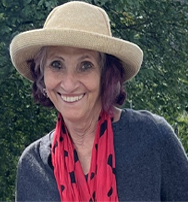 Pattie Trumble, MPP, MPH
Pattie Trumble is a nurse who worked in both California and New York for many years as an emergency room nurse. She holds a Bachelor’s Degree in Economics from the University of California, Berkeley, and an Associate Degree in Nursing from the Samuel Merritt Hospital School of Nursing. After 10 years of providing direct care, she went back to school and earned concurrent Master’s degrees in both public policy and public health from the University of California, Berkeley. Thereafter, she worked for various public health agencies in California at both the community and state levels providing economic and legislative analysis.
Nearby States